
MEN
The Rolex Daytona Buying Guide 2026
Sep
If you got into watches during the last decade or so, there’s a very good chance the Rolex Daytona had something to do with it. Or more precisely, one particular Rolex Daytona.
For much of its early life, the Daytona was simply a well-regarded Swiss chronograph—respected, but not yet dominant—sitting alongside strong competitors like Zenith, Breitling, and TAG Heuer. It was functional first, collectible second.
When Paul Newman’s personal Daytona sold for more than $17 million in 2017 at Phillips, as widely reported by outlets such as The New York Times and Reuters, it didn’t just set a record. It redefined how people thought about vintage watches altogether. What had been a niche collecting segment suddenly became part of mainstream luxury conversation.
Still, that auction moment explains perception more than it explains how to actually buy a Daytona today.
And buying one still comes down to understanding the references.
Why the Daytona is rarely just “one watch”
A common mistake is treating the Daytona as a single model. In practice, it behaves more like a lineage of distinct watches, each tied to a specific technical and market shift.
| Era | What defined it | Why it matters today |
|---|---|---|
| Early manual-wind years | Original chronograph identity | Historical foundation |
| Zenith-era 16520 | First automatic Daytona | Transitional collector relevance |
| 116520 | First in-house movement | Modern baseline ownership |
| 116500LN | Ceramic bezel generation | Strong demand and visibility |
| 126500 | Current refinement | Updated proportions and movement |
Each of these references carries its own logic. And the market does not treat them interchangeably.
The 16520
The 16520 marks the first major turning point. Introduced in 1988, it used a modified Zenith El Primero-based movement (Cal. 4030), giving the Daytona its first automatic chronograph system.
On paper, that sounds technical. In reality, it’s why this reference feels like a bridge watch.
It still carries vintage character, but it’s far more wearable than earlier manual-wind Daytonas. That combination is exactly why it continues to attract collectors.
There is, however, a trade-off. This reference demands scrutiny. Dial variations, service replacement parts, polishing, and case condition all meaningfully affect value. It’s not difficult to own, but it’s easy to misjudge.
The 116520
Introduced in 2000, the 116520 brought the Caliber 4130 in-house. That change matters more than it sounds, because it standardised the Daytona as a fully Rolex-integrated chronograph.
This is the reference that feels most “neutral” in hindsight.
It doesn’t rely on visual drama, and that’s part of its appeal. The steel bezel gives it a quieter profile compared to later ceramic models, which makes it more versatile than buyers often expect.
In practical terms, it tends to attract buyers who want:
- A modern Daytona without ceramic pricing pressure
- A strong movement foundation (Cal. 4130)
- A design that won’t feel overly trend-driven later
It’s not the loudest reference, but it’s one of the most balanced.
The 116500LN
Released in 2016, the 116500LN changed how the modern Daytona was perceived.
The Cerachrom bezel didn’t alter the movement, but it changed the visual presence significantly. Higher contrast, sharper silhouette, and stronger on-wrist recognition all contributed to a noticeable shift in demand.
This is also where market psychology becomes hard to ignore.
The watch became instantly recognisable in photos and social media, and that visibility fed back into pricing pressure. Not because the mechanics changed, but because recognition did.
Buyers typically fall into three groups here:
- Those who want the most recognisable modern Daytona
- Those prioritising durability and daily wear confidence
- Those who value liquidity above all else
The trade-off is straightforward: you’re often paying for demand visibility as much as design.
The 126500
The current 126500 series doesn’t attempt to redefine the Daytona. Instead, it refines proportions and updates internal architecture with the Caliber 4131.
Rolex rarely makes dramatic generational shifts in this line, and this is another example of that philosophy. The result is familiar, but subtly improved.
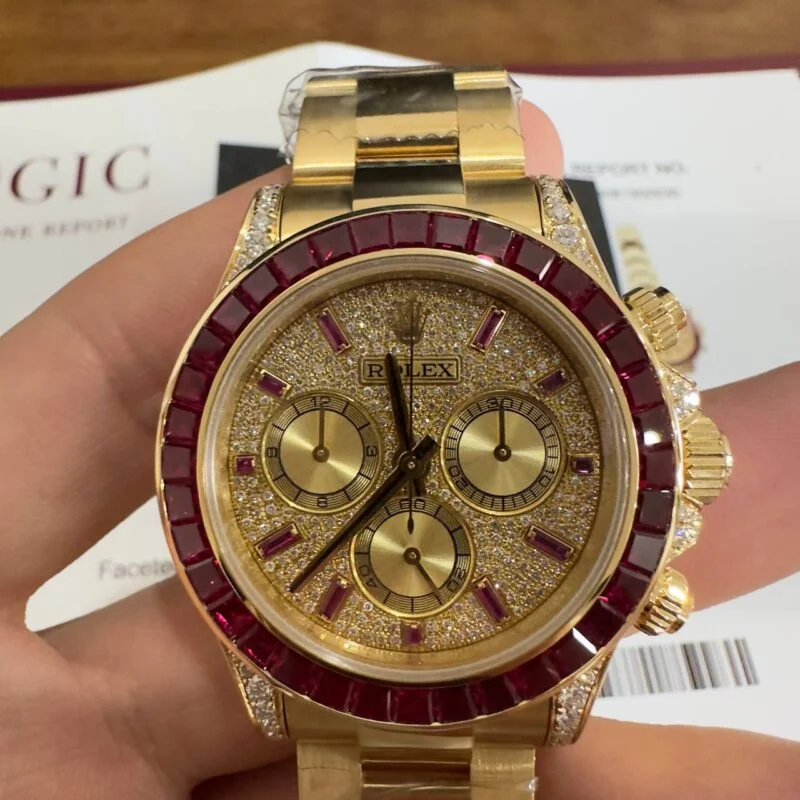
For buyers, the decision is less about capability and more about preference:
- Choose the 126500 if you want the latest production standard
- Choose the 116500LN if you prefer established market positioning
- Choose earlier references if you want historical or mechanical distinction
None of these choices is inherently superior. They simply behave differently over time.
Material matters more than many buyers expect
Reference gets most of the attention, but material often determines long-term satisfaction.
Steel remains the most flexible option, both in wearability and resale liquidity. It’s the default for a reason.
Gold changes the character entirely. It becomes a statement piece rather than a neutral chronograph. White gold softens that impact, while platinum moves into collector territory where feel and rarity matter more than visibility.
| Material | Ownership character | Market behaviour |
|---|---|---|
| Steel | Balanced, versatile | Highest liquidity |
| Yellow gold | Bold, expressive | More niche demand |
| White gold | Discreet luxury | Steady but selective |
| Platinum | Collector-focused | Low volume, high specificity |
These differences matter as much as reference numbers over a long ownership cycle.
Movement architecture and why it matters on the wrist
The modern Daytona’s Caliber 4131 (and earlier 4130) is part of why the watch feels so consistent in use.
The vertical clutch and column-wheel system aren’t abstract engineering details—they affect how the chronograph behaves.
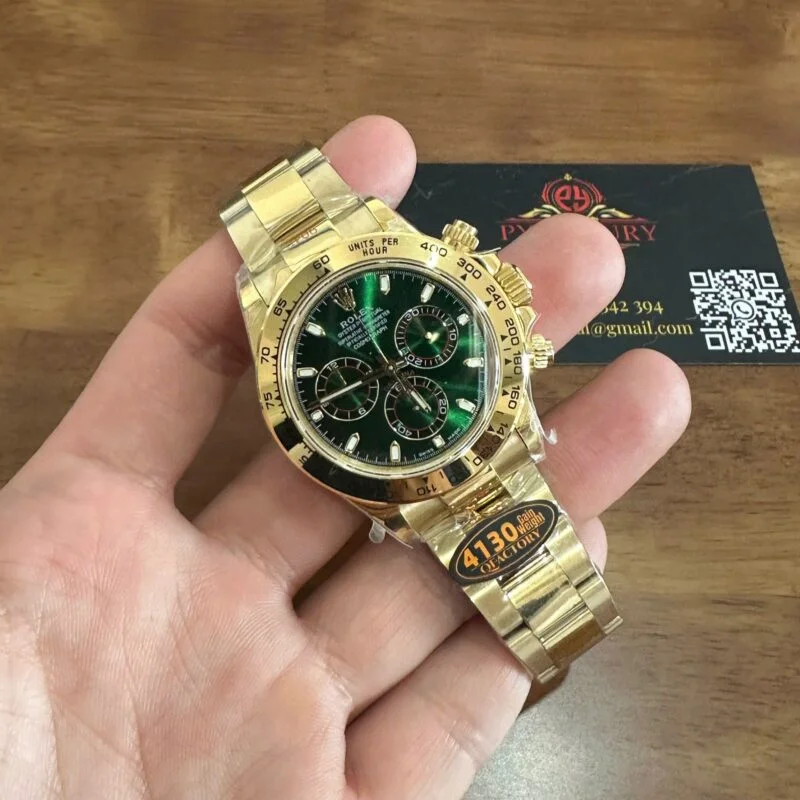
Start the stopwatch, and the hand moves without hesitation. Reset it, and it returns cleanly. That mechanical clarity is one of the reasons the Daytona’s reputation has remained stable over time.
Monochrome and other technical analyses of the 4131 highlight efficiency improvements, including reduced component complexity and improved energy management. In practical terms, that translates into smoother long-term ownership rather than visible “performance gains.”
What actually drives value
Daytona pricing is often misunderstood as purely hype-driven. In reality, it’s structured but multi-layered.
The main drivers are:
- Reference generation
- Material selection
- Dial configuration
- Condition and case integrity
- Originality and parts consistency
- Completeness (box, papers, service records)
Among these, condition and originality often matter more than most first-time buyers expect.
A lightly worn, honest example can outperform a heavily polished “perfect-looking” one simply because the market values authenticity.
Where mistakes usually happen
Most errors don’t come from misunderstanding the watch itself—they come from misunderstanding the market.
Buyers often anchor to asking prices rather than completed transactions. Sellers often anchor to peak listings. Both approaches create distortion.
A more reliable approach is simpler: reduce unknowns.
If buying, focus on:
- Dial consistency and matching components
- Case geometry (avoid over-polishing)
- Movement verification
- Serial/reference alignment
- Full disclosure from the seller
If selling:
- Gather full documentation
- Be transparent about service history and parts
- Present clear, structured condition photos
If trading:
- Know the target reference before negotiating
- Compare both watches under realistic market pricing
- Avoid treating trades as shortcuts around valuation clarity
One of the most common ownership mistakes is over-servicing.
The Daytona is designed for long-term use, but servicing should prioritise function over cosmetic renewal. Water resistance, amplitude, and chronograph performance matter more than visual restoration.
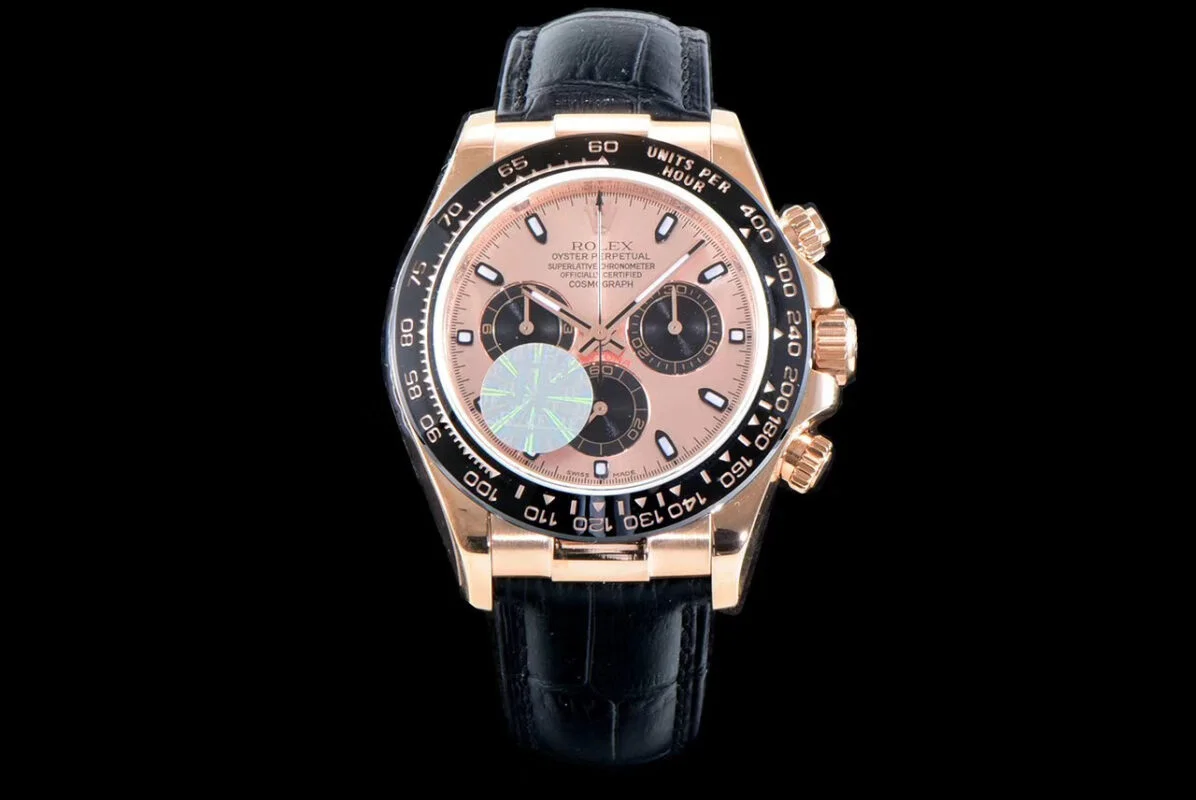
Over-polishing or unnecessary part replacement can reduce collector appeal even when the watch looks “better” superficially.
Frequently asked questions
Is a Rolex Daytona a good investment?
It can be, but that should not be the primary reason to buy one. Condition, reference, and timing all matter, and long-term ownership tends to reward selection quality more than speculation.
Why are Daytonas so expensive and hard to find?
Demand consistently exceeds supply for key references, particularly in steel. Combined with strong brand identity and long-term collector interest, this creates persistent pricing pressure.
Is the Daytona suitable for daily wear?
Yes, especially modern references. It’s mechanically robust and designed for regular use, though its visibility means it may not be an understated choice in every environment.
What does servicing cost?
It varies significantly depending on condition and required work. Routine servicing differs greatly from restoration-level interventions, so costs are not fixed.
The Daytona is not difficult to understand once it’s broken into references, materials, and ownership behaviour.
What makes it challenging is not complexity, but overlap—between history and demand, between technical function and perception, and between what it is and what the market believes it is.
