
MEN
Rolex Materials, Daytona Dials, and the Rumors Surrounding 2026
Sep
Rolex watches can seem deceptively simple. Clean bezels. Familiar cases. A handful of designs that barely change from one decade to the next. Yet beneath that restrained exterior sits one of the most obsessive approaches to materials in modern watchmaking.
That’s really where a large part of Rolex’s identity comes from.
The shine of Oystersteel feels different from ordinary stainless steel. Cerachrom bezels somehow manage to look fresh years later, even on heavily worn sports models. And platinum – perhaps more than any other precious metal – communicates luxury almost quietly. No flash required.
This article takes a closer look at the materials Rolex relies on most heavily, from steel and gold to ceramic and sapphire crystal. Along the way, we’ll also drift into the collector world a little, because with Rolex, materials and market culture are often inseparable.
Why Rolex Steel Feels Different
Rolex markets its stainless steel under the name Oystersteel, though the material itself is essentially 904L steel – an alloy long associated with industries where corrosion resistance genuinely matters, including aerospace and chemical engineering.
That might sound like marketing language at first. Then you handle a well-finished Submariner or Deepsea for a while and start to understand what replica Rolex was aiming for.
The steel has a noticeably brighter sheen than the 316L steel used by most manufacturers. Not dramatically brighter, perhaps, but enough that seasoned collectors tend to spot it immediately under certain lighting conditions.
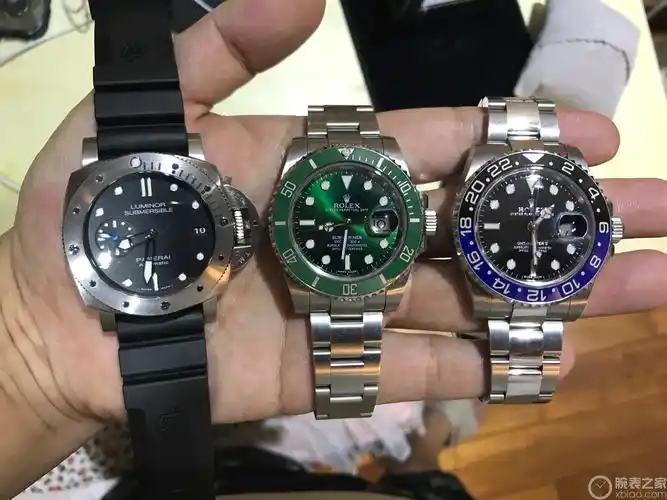
More importantly, Oystersteel is incredibly resilient in daily use. Salt water, humidity, sweat, temperature changes – Rolex sports models are built around the assumption that owners will actually wear them. That’s part of the reason vintage Submariners from decades ago can still look surprisingly sharp today.
And honestly, Rolex deserves some credit here. The brand rarely talks loudly about innovation, but its material consistency over generations is one reason older references age so well.
Gold at Rolex: More Than Just Luxury
Gold has always occupied a slightly unusual place within Rolex collections.
On one hand, gold Day-Dates and Daytonas are unmistakably luxurious. On the other, Rolex tends to engineer even its precious metal watches with a kind of utilitarian mindset. They still feel solid. Dense. Built to be worn rather than simply admired from a safe.
Rolex uses 18-karat gold across its collections, blending 75% pure gold with various alloys to improve durability and achieve different tones.
The main variations include:
| Gold Type | Characteristics |
|---|---|
| Yellow Gold | Traditional, warm, highly reflective |
| White Gold | More restrained and modern-looking |
| Everose Gold | Rolex’s proprietary rose gold alloy with improved color stability |
Everose is particularly interesting because Rolex developed it partly to combat fading. Earlier rose gold watches from many brands could lose warmth over time, especially after prolonged UV exposure. Everose tends to retain its coppery tone much better.
Collectors sometimes debate whether Rolex overuses Everose these days. Maybe. Still, on references like the Daytona or Yacht-Master, the warmer tone gives the watches a softer personality than standard yellow gold ever could.
Platinum: Heavy, Quiet, and Slightly Intimidating
Platinum Rolex watches don’t scream for attention. They don’t need to.
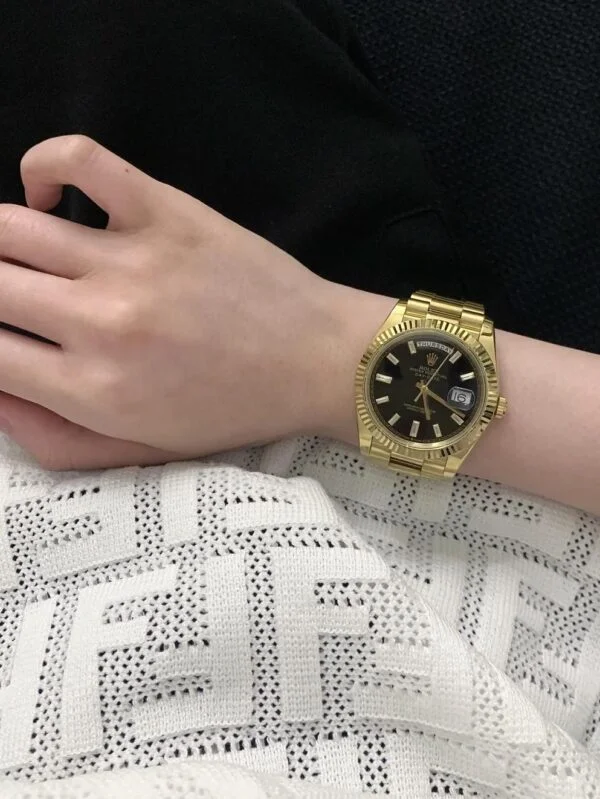
A platinum Daytona or Day-Date often looks surprisingly restrained from across the room. Then you pick one up. The weight is almost shocking the first time.
Rolex uses Platinum 950, meaning the alloy contains 95% pure platinum. The remaining material typically includes ruthenium, which helps improve hardness and finishing quality.
The famous ice-blue dials reserved for platinum Rolex models have become something of a quiet status symbol among collectors. Not everyone notices them. Enthusiasts always do.
And yes, the prices are eye-watering. But platinum Rolex watches have a strange emotional appeal that’s difficult to explain until you wear one for a few hours.
The Rolex Two-Tone Formula
Two-tone watches used to feel dated for a while. Then fashion shifted again.
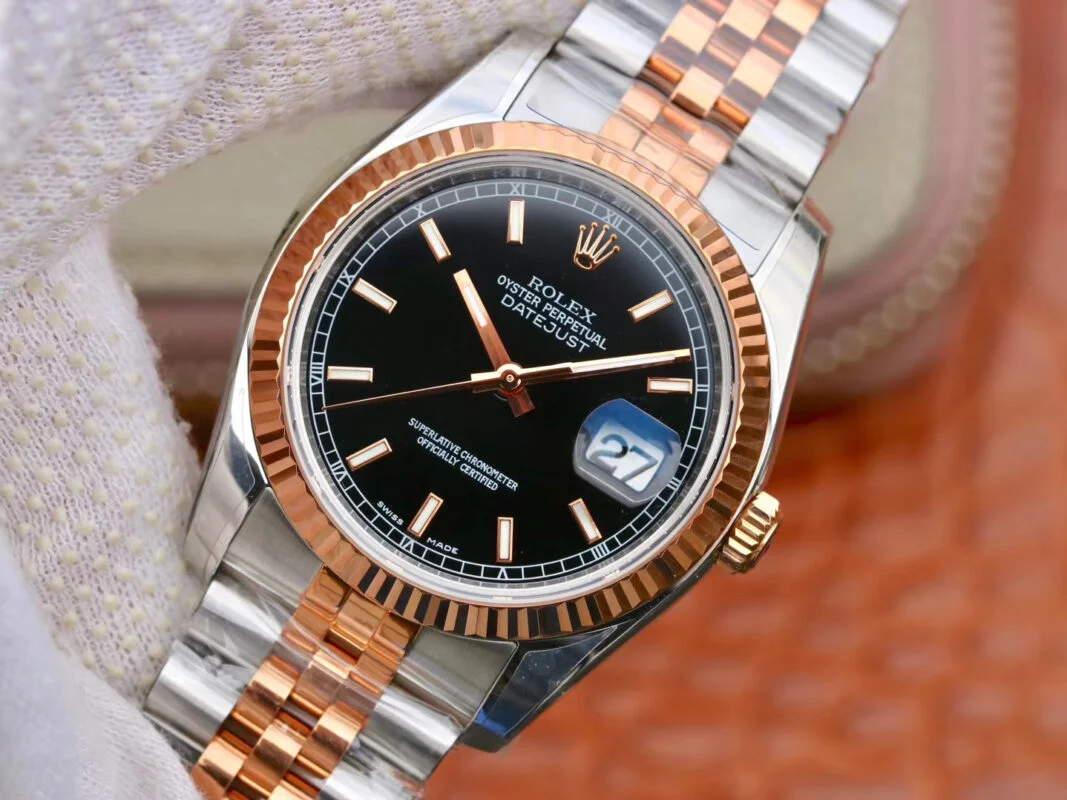
Rolex trademarked the name “Rolesor” back in 1933 to describe the combination of steel and gold within a single watch. Typically, the steel forms the structural base, while gold appears on the bezel, crown, and center bracelet links.
What’s interesting is how flexible Rolesor can feel depending on the reference.
A two-tone Datejust feels elegant and slightly nostalgic. A steel-and-gold GMT-Master II can feel almost aggressively flashy in comparison. Same concept. Completely different personality.
For many buyers, Rolesor hits a sweet spot:
- more warmth than steel,
- less formality than full gold,
- and usually a lower price than precious metal models.
Not bad, honestly.
Rolex’s Ceramic Obsession
Rolex introduced Cerachrom bezels in the mid-2000s, first appearing prominently on the GMT-Master II. At the time, ceramic bezels were still relatively novel in luxury replica watches.
Traditional aluminum bezels developed scratches, fading, and wear relatively quickly. Some collectors love that aging process. Others hated it. Rolex clearly preferred permanence.
Cerachrom is:
- highly scratch-resistant,
- UV-resistant,
- corrosion-resistant,
- and extremely color stable.
That last point matters more than people realize. Creating a two-color ceramic bezel – especially something like the red-and-blue Pepsi insert – is technically very difficult. Rolex spent years refining the process.
The irony is that some collectors now miss faded aluminum bezels because they carried more personality. Vintage enthusiasts are never fully satisfied. That’s part of the fun.
Everyday Practicality Wins
Rolex began transitioning toward sapphire crystal in the late 1970s, eventually making it standard across almost the entire catalog.
From a practical standpoint, sapphire crystal simply makes sense. It’s extremely hard and highly resistant to scratches, which means the watch maintains a cleaner appearance over time.
Sapphire is more brittle than acrylic. A sufficiently hard impact can shatter it rather than merely scratch it. Thankfully, that’s relatively uncommon in normal use.
Still, there’s something slightly charming about old acrylic Rolex crystals. Vintage collectors often talk about the warmth and distortion they create under certain angles. Modern sapphire is technically superior, but perhaps a little less romantic.
Then again, most people would probably rather avoid scratching their watch every other week.
The Rolex GMT-Master II “Pepsi” and the End of an Era?
Few modern Rolex watches have generated as much sustained hype as the GMT-Master II “Pepsi” ref. 126710BLRO.
Ever since the steel version returned in 2018, demand has bordered on absurd. Waiting lists stretched for years. Secondary-market prices climbed far beyond retail. And somehow, despite the saturation of luxury sports watches online, the Pepsi never really lost momentum.
Now there are growing reports that Rolex may have quietly discontinued the model.
If true, it would be one of the biggest Rolex stories of recent years.
Why the Pepsi Matters So Much
The original GMT-Master dates back to 1954 and was developed alongside Pan Am pilots who needed to track multiple time zones during long-haul flights.
Rolex’s solution was brilliantly simple:
- a rotating 24-hour bezel,
- an additional GMT hand,
- and a two-tone color scheme separating day and night hours.
The red-and-blue bezel eventually earned the nickname “Pepsi,” and the design became one of the most recognizable watch aesthetics ever created.
That’s not exaggeration, either. Even people outside the watch world often recognize it immediately.
Interestingly, the Pepsi hasn’t always been continuously available. Rolex temporarily removed the red-and-blue ceramic bezel from production for several years before reintroducing it in white gold in 2014, followed later by the steel version collectors desperately wanted.
The steel Pepsi quickly became one of those rare modern watches that transcended ordinary product status and turned into a cultural object.
Market Reaction Has Already Started
As soon as rumors of discontinuation surfaced, the secondary market reacted almost instantly.
Prices on unworn examples reportedly jumped from roughly $23,000 to around $25,000–26,000 within days, while retail pricing remained dramatically lower.
That behavior is fairly typical for Rolex. Scarcity drives attention, attention drives speculation, and speculation feeds collector psychology.
Still, it’s probably worth remaining cautious before declaring the Pepsi the next ultra-rare grail piece.
Unlike truly limited-production watches, thousands of modern Pepsi references already exist. Rolex produced the model for years. Supply isn’t tiny.
But iconic status changes the equation. It always does.
And if Rolex really has paused or ended production, the current generation may become even more desirable over time – especially once it formally disappears from Rolex catalogs and authorized dealer inventories.
Will Rolex Bring It Back Again?
That’s the question everybody keeps asking.
History suggests the answer is: maybe.
Rolex has a habit of temporarily removing beloved configurations only to revive them years later in slightly different forms. The brand understands nostalgia exceptionally well, even if it rarely acknowledges that publicly.
So while collectors are already talking about “the end of the Pepsi,” it may simply be another pause in the model’s long history.
Or maybe not.
That uncertainty is part of what keeps the Rolex ecosystem constantly moving.
Tiny Details, Massive Consequences
Few watches demonstrate the power of a dial better than the Rolex Daytona.
Technically speaking, many Daytona references are quite similar. Yet tiny dial variations can transform an ordinary-looking example into a multimillion-dollar collector piece almost overnight.
Sometimes the difference comes down to a printing error barely visible without magnification.
That sounds ridiculous to outsiders. To collectors, it makes perfect sense.
The Paul Newman Dial
No Daytona discussion can begin anywhere else.
The so-called Paul Newman Daytonas featured exotic dials with contrasting subdials, Art Deco numerals, and unusual visual layouts that initially weren’t especially popular.
Ironically, that lack of popularity helped create their rarity.
Once actor Paul Newman became publicly associated with the watch, collector interest exploded. Today, these references sit among the most valuable vintage Rolex watches ever produced.
One sold for millions at auction and permanently altered the vintage Daytona market.
Panda and Reverse Panda Dials
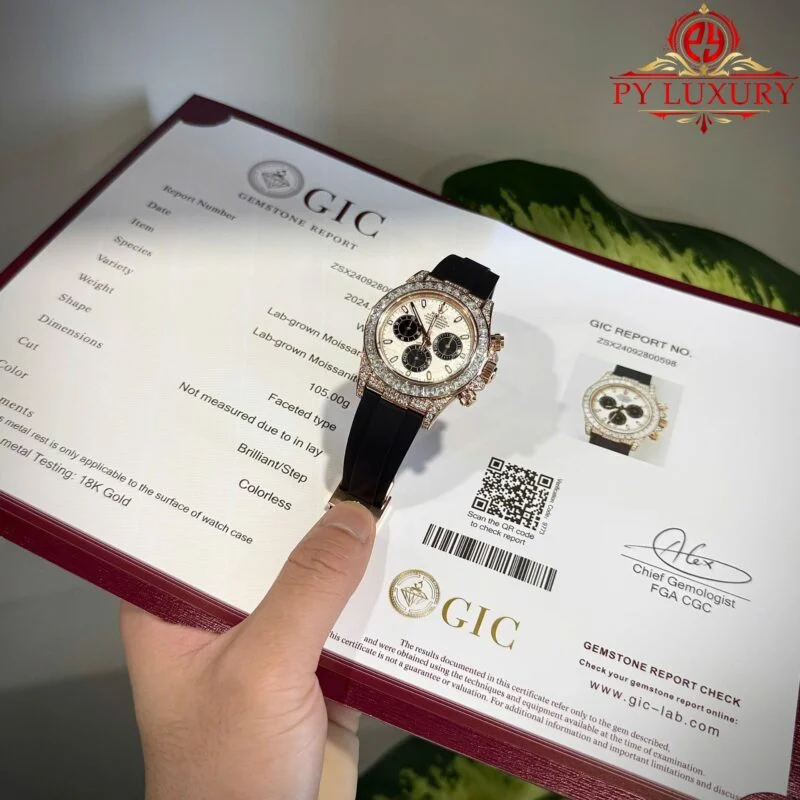
The panda layout remains one of the cleanest chronograph designs Rolex has ever produced:
- light dial,
- dark subdials,
- strong contrast,
- excellent readability.
Reverse panda configurations invert the formula and often feel slightly more aggressive visually.
What’s fascinating is how timeless the design still feels. Modern chronographs across the industry continue borrowing heavily from this layout decades later.
Meteorite Dials
Meteorite Daytonas occupy a strange place in the Rolex world.
They’re luxurious, flashy, technical, and slightly over-the-top all at once.
Each meteorite dial displays a naturally occurring Widmanstätten pattern, meaning no two examples are exactly identical. Rolex cuts thin slices from actual meteorites and treats them for stability before installation.
Some collectors love them. Others think they cross into excess.
Personally, they make more sense on Oysterflex models than on full precious-metal bracelets. The rubber strap tones down the drama just enough.
The Patrizzi Effect
Patrizzi dials are a perfect example of accidental collectibility.
Certain Daytona subdials gradually turned brown over time due to aging lacquer. Originally, this was considered a defect. Later, collectors began obsessing over the warm tropical coloration.
Now heavily aged Patrizzi Daytonas can command enormous premiums.
The vintage Rolex market has always had a slightly irrational side to it.
That unpredictability is probably why so many people find it addictive.
Rumors, Expectations, and Wishful Thinking
Every year follows the same cycle:
- rumors,
- leaks,
- speculation,
- disappointment,
- surprise.
And somehow Rolex fans never get tired of it.
After the launch of the Land-Dweller in 2025 – arguably fake Rolex’s boldest design move in years – expectations for 2026 are unusually high.
Could the Milgauss Return?
The anti-magnetic scientist’s watch celebrates its 70th anniversary, and Rolex rarely ignores major anniversaries entirely. Whether that means a full relaunch is another question.
Collectors seem largely united on one point, though:
if the Milgauss returns, the lightning-bolt seconds hand absolutely needs to stay.
The original design still feels surprisingly modern today, which may explain why enthusiasm for a comeback remains strong years after discontinuation.
Small Rolex Changes Tend to Matter Most
One thing newer collectors sometimes underestimate is how subtle Rolex evolution usually is.
The company rarely reinvents watches from scratch. Instead, it tweaks:
- dial colors,
- hand shapes,
- bracelet proportions,
- case refinements,
- bezel materials.
Tiny details. Massive reactions.
That’s part of Rolex’s genius, honestly. The brand understands continuity better than almost anyone else in luxury manufacturing.
What Many Enthusiasts Actually Want
A surprising number of collectors seem less interested in another dial variation and more interested in a genuinely new complication.
That’s where Rolex still feels conservative compared to some competitors.
The Land-Dweller introduced new technical ideas, particularly through the Dynapulse escapement, but many enthusiasts still want something functionally different:
- a new travel complication,
- a more advanced timing system,
- perhaps even an entirely new sports-watch category.
Will Rolex actually do that?
Probably not immediately.
Then again, few people predicted the Land-Dweller either.
And that’s why rumor season remains so entertaining every single year.
Rolex occupies a strange position in modern watch culture.
It’s simultaneously conservative and trend-setting. Predictable and unpredictable. Overexposed, yet somehow still endlessly discussed.
Whether we’re talking about Oystersteel, Cerachrom bezels, discontinued Pepsi GMTs, tropical Daytona dials, or speculation surrounding 2026 releases, the deeper appeal of Rolex often comes down to one thing: small details that slowly gain meaning over time.
